
Biogas Solutions & Waste-to-Energy
Custom-engineered domestic and institutional biogas digesters, agricultural waste management systems, gas piping networks, and maintenance engineered for sustainable energy and bio-fertilizer production.
Converting organic waste into clean cooking gas and rich organic fertilizer.
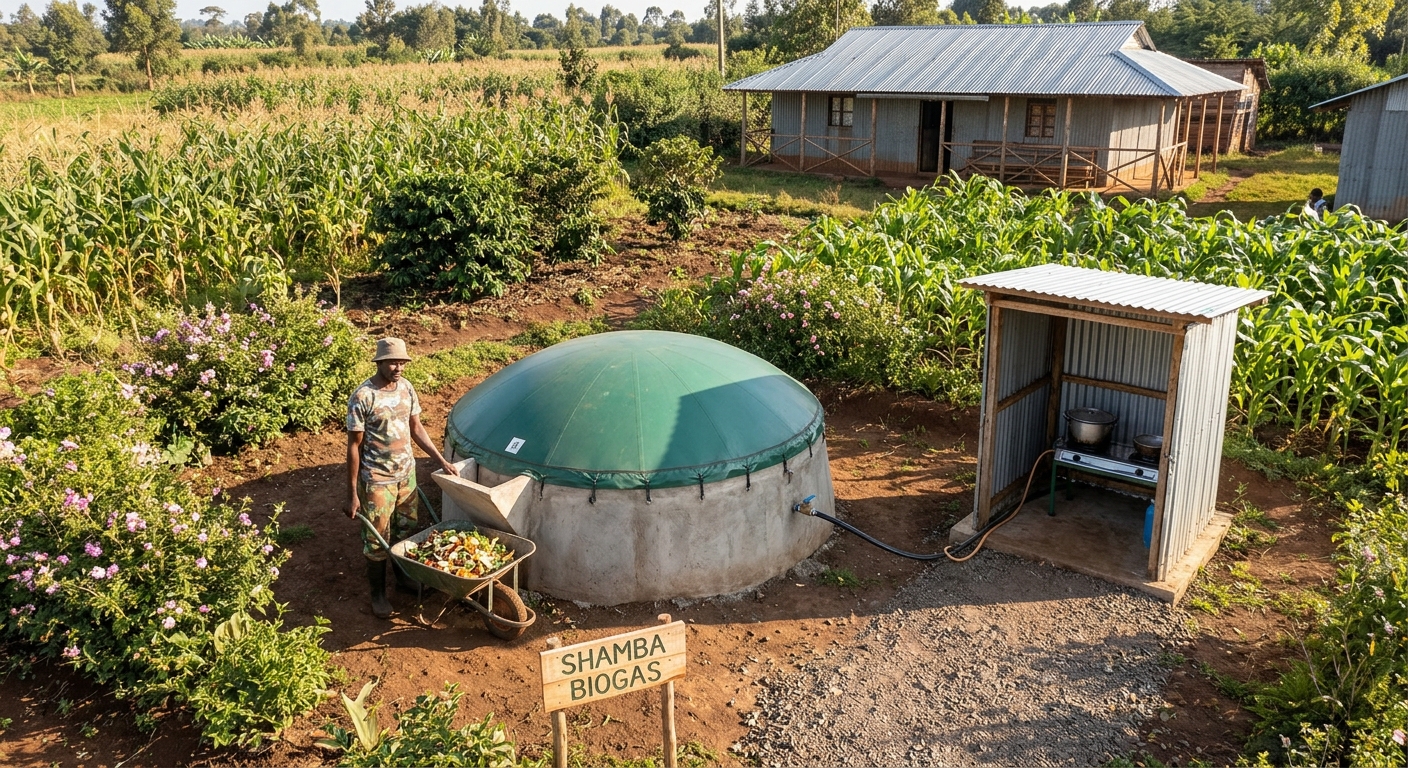
Organic waste from livestock farming, dairy operations, and institutional kitchens presents both an environmental disposal challenge and an untapped energy resource. At Ubunifu Green Solutions, we design and construct robust anaerobic biogas digester systems that convert agricultural and organic waste into reliable, clean-burning methane gas and nutrient-dense bio-fertilizer slurry.
Whether you operate a dairy farm in Nakuru, a rural homestead, or a boarding institution, our engineering team tailors digester capacity, gas distribution piping, and burner connections to match your daily organic feedstock volume.
Complete Biogas Engineering Scope
Professional design, construction, and plumbing integration across four core biogas infrastructure areas.
Domestic & Institutional Digesters
Custom-sized fixed-dome and tubular anaerobic digesters engineered for rural households, farms, schools, and hospitals.
- Feedstock volume calculations (livestock manure vs. kitchen waste)
- Reinforced concrete or prefabricated modular digester construction
- Optimized hydraulic retention time and gas storage chambers
Agricultural Waste Management
Systematic collection channels, mixing chambers, and slurry management layouts designed for dairy and livestock operations.
- Effluent gravity-feed channels and manure separation pits
- Organic slurry collection and organic fertilizer storage ponds
- Odor reduction and farm sanitation enhancement protocols
Gas Piping Networks & Safety Valves
Professional gas distribution plumbing connecting the digester safely to kitchens, burners, or heating appliances.
- Pressure regulators, moisture traps, and sediment separators
- Heavy-duty HDPE or galvanized gas supply pipe reticulation
- Flame arrestors and emergency shut-off safety valves
Stove Connections & System Maintenance
Biogas burner fittings, institutional stove conversions, and scheduled maintenance for long-term gas generation.
- Specialized low-pressure biogas stoves and double-burner installations
- Digester stirring, pH monitoring, and maintenance advisory
- System troubleshooting and pressure testing services
Key Applications
Operational Benefits
Our 4-Step Biogas Implementation Workflow
A structured engineering procedure from feedstock assessment to flame testing.
Feedstock & Site Assessment
Evaluating daily organic waste quantities, livestock numbers, kitchen volume, and available plot space.
Digester Design & Sizing
Calculating cubic meter (m³) digester capacity, gas holder volume, and piping layout.
Construction & Plumbing
Excavating, building the digester core, installing gas traps, and laying pressure tested supply lines.
Inoculation & Commissioning
Charging the digester with starter culture and manure, monitoring gas accumulation, and testing burners.
Frequently Asked Questions
Clear answers to common questions about biogas digesters and organic waste-to-energy systems in Kenya.
Generally, a standard domestic biogas digester requires manure from at least 2 to 3 dairy cows (or equivalent pig/poultry waste combined with kitchen scraps) mixed with an equal volume of water daily to maintain steady gas production.
Biogas digesters are low-maintenance systems. Routine upkeep involves regular feeding with organic slurry, draining condensed moisture from gas moisture traps periodically, and ensuring inlet and outlet chambers remain clear.
Yes. While cooking is the most common application, purified and high-capacity biogas systems can also be connected to specialized gas generators for electricity or space heating in institutional and agricultural settings.
Absolutely. The discharged bio-slurry is an exceptional organic fertilizer that is free of weed seeds and unpleasant odors, providing balanced macro-nutrients directly to farm soils.
Ready to Turn Your Farm Waste Into Clean Energy?
Contact our renewable energy engineers in Nairobi and Nakuru for a custom digester sizing and consultation.
Request Biogas Consultation →